
Wastewater Treatment Process Overview
The Pepper’s Ferry Regional Wastewater Treatment Authority uses a multi-stage, engineered treatment process designed to remove solids, nutrients, organic material, and pathogens from municipal wastewater. Each treatment phase relies on physical, chemical, and biological mechanisms to ensure the effluent meets stringent state and federal water-quality standards before discharge.
Core Treatment Processes
Influent Screening & Grit Removal
Wastewater entering the facility first passes through mechanically-raked bar screens that remove large inorganic debris. Grit chambers then use velocity-controlled flow to settle sand, gravel, coffee grounds, and other dense particulates that would otherwise damage equipment or accumulate in tanks.Primary Clarification (Physical Separation)
In large settling basins, the flow velocity is reduced, allowing suspended solids to settle as primary sludge while floatable materials (oils, fats, and grease) rise for skimming. This step can remove roughly 50–60% of total suspended solids (TSS) and significantly lowers biochemical oxygen demand (BOD).Biological Treatment / Nutrient Removal
The heart of the treatment plant is the activated-sludge process. Wastewater enters aeration basins where specialized microbial communities metabolize dissolved organic matter. Carefully controlled oxygen levels, mixing, and retention times enable nitrification and denitrification, reducing ammonia and total nitrogen concentrations. Many modern systems also incorporate biological or chemical phosphorus removal to meet nutrient-reduction requirements for Virginia watersheds.Secondary Clarification
After biological treatment, the mixed liquor flows into secondary clarifiers where activated sludge settles out. A portion of this biomass is returned to the aeration basins to maintain a stable microbial population, while excess solids are diverted to solids processing.Disinfection and Final Effluent
The clarified water is disinfected—commonly using ultraviolet (UV) irradiation or controlled chlorination—to inactivate pathogenic organisms. Treated effluent is then discharged to the receiving stream in compliance with DEQ permit limits for nutrients, BOD, TSS, and bacteria.
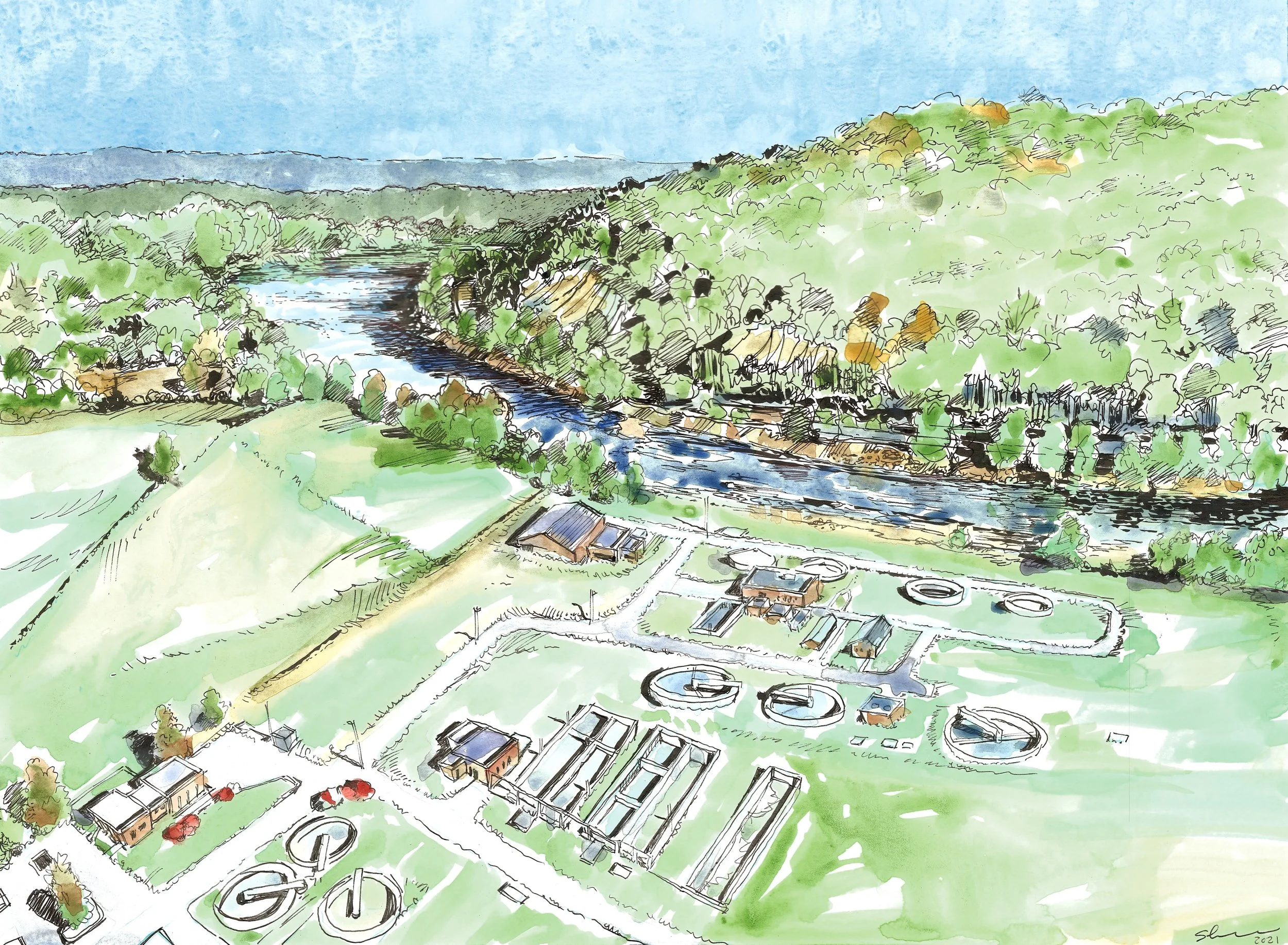
Solids Handling and Stabilization
Primary and secondary sludges are thickened, stabilized (often through aerobic or anaerobic digestion), and dewatered. The resulting biosolids are processed to meet regulatory standards for safe disposal or beneficial reuse.